Insight earned close to the problem.
Technical expertise, lived experience, research, work, land, industry, or community knowledge can reveal what distant markets miss.
West Coast Canadian incubator & accelerator
We run small, intensive cohorts for founders building technology and applied-innovation companies—especially beyond Canada’s established venture centres. We combine cohort discipline, operator mentorship, customer access, and capital mechanics to move founders from insight to a durable, fundable company.
boundary condition
noun
A constraint a solution must satisfy. In a company, it may be access to a customer, an operator, capital, infrastructure, regulatory knowledge, geography—or the confidence to make a difficult decision. Constraints are not only obstacles: the right ones give creativity its direction—walls along the road, never across it.
01 / The mission
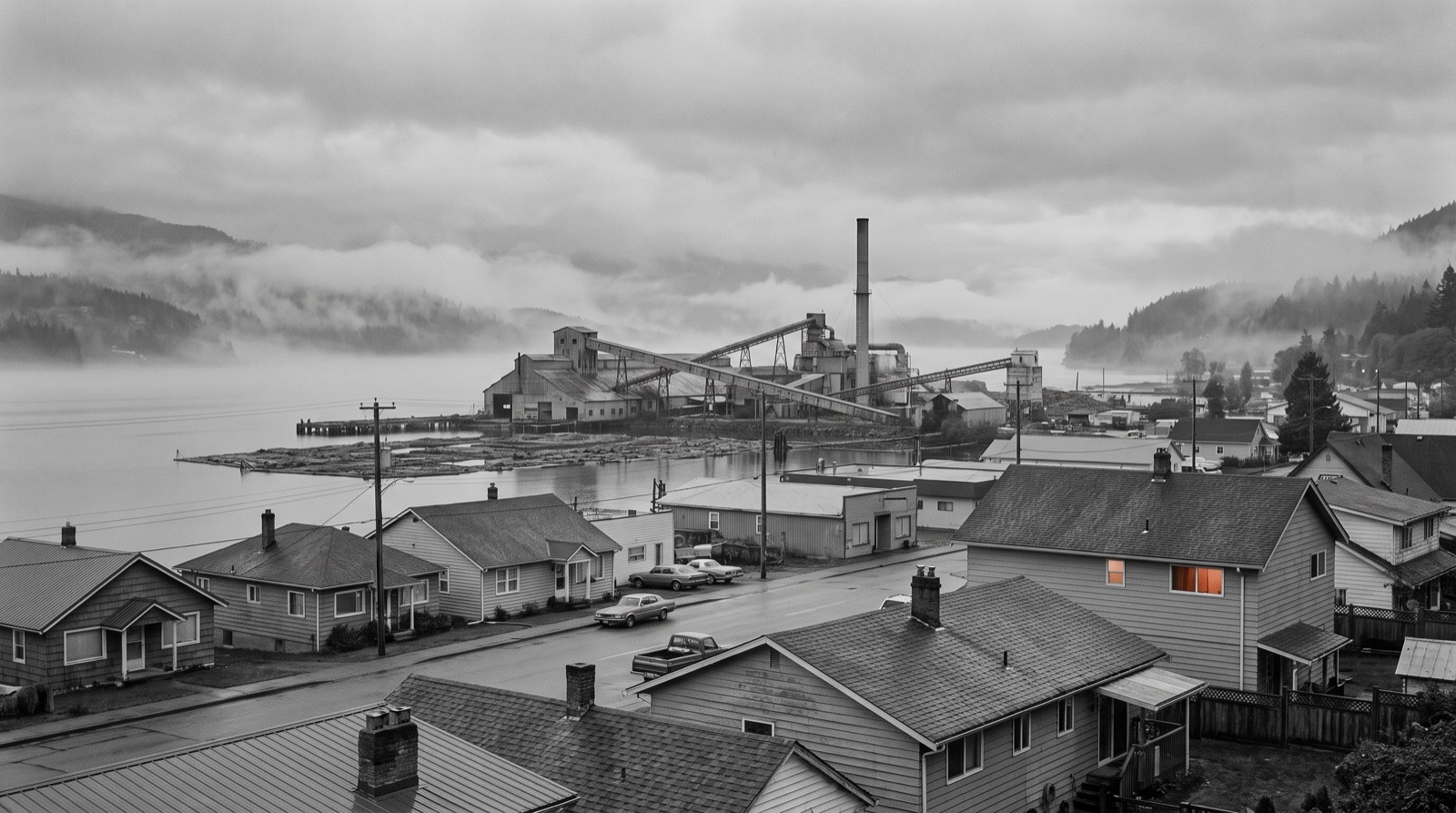
Many Canadian communities were built around a mill, mine, port, fishery, plant, or other anchor industry. When one employer contracts or closes, the talent and ambition do not disappear—but economic concentration becomes a profound vulnerability.
Economic resilience means more founders, more locally rooted employers, and more paths from Canadian knowledge to Canadian-owned companies. We want to help build technology, cleantech, greentech, applied-science, and advanced-industry companies that can sell far beyond their home region while creating skilled work, capability, and decision-making power within it.
This is a parallel-economy strategy, not a replacement story: rural innovation and opportunity, built from the industries, infrastructure, people, and practical knowledge already present. And it is for the people the traditional venture path was never built around—founders with the insight and the drive, but not the network, the wealth, or the postal code the industry expects. That includes towns that rise or fall with a single employer, and Indigenous communities building economic power on their own terms.
We intend to be a crucible for that work: founders, operators, customers, and capital brought together with enough structure and heat to turn insight into companies that last. Every durable company it produces builds the same thing—a stronger Canada.
We believe talent is everywhere and opportunity is not—and that this is a condition to change, not a fact to accept. We believe a company can be an act of care for a place: meaningful work, real ownership, and a reason for the next generation to stay. We think in decades, and we do this work out of love for these communities as much as conviction about their markets.
Rural economic development context — Canada ↗ · Indigenous economic development in B.C. — PacifiCan ↗
02 / The cohort
The cadence is plain and demanding: prove demand, build and ship, reach customers, strengthen the founding team, understand the numbers, and prepare for the right form of capital. Cohorts learn a battle rhythm drawn from lean practice—build the smallest version that can teach you something, put it in front of real customers, measure honestly, and let the evidence set the next move. Founder sessions, office hours, peer accountability, operator mentorship, and fieldwork keep the tempo.
The working spine
We organize every cohort around these six venture mechanics, then apply them to the evidence and decisions inside each company.
Founder-market fit, the problem, the buyer, the insight others miss, assumptions, team fit, and the first decisive test.
Discovery, demand signals, buying behaviour, alternatives, urgency, and the evidence required to earn the next build.
Prototype scope, product velocity, feasibility, technical choices, and the smallest useful release that can create learning or revenue.
Positioning, pricing, pilots, sales motion, partnerships, procurement, and a credible route to repeatable demand.
Founder roles, ownership, governance, runway, metrics, operating cadence, security, privacy, and delivery discipline.
Non-dilutive funding, revenue, angel and venture fit, use of funds, diligence readiness, milestones, and a 12-month plan.
Companies leave the cohort with
03 / The gap
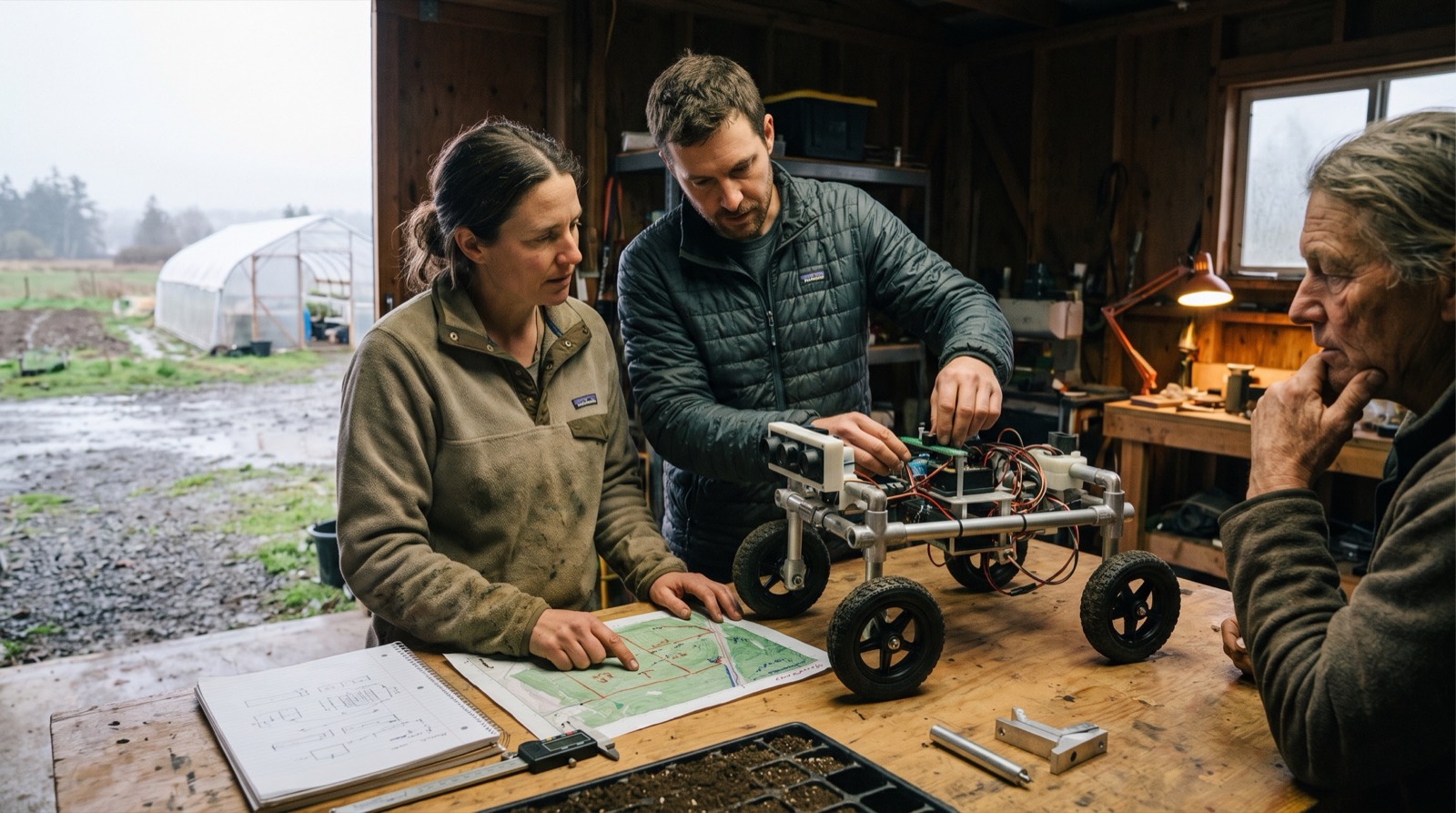
We are not lowering the bar for founders outside conventional venture networks. We are looking for exceptional company-building potential where proximity, background, wealth, confidence, caregiving, disability, or geography may have limited access—not ability. The two PhDs in a garage with a working prototype. The operator who kept a mill running for a decade. The artist turning a following into a storefront.
Technical expertise, lived experience, research, work, land, industry, or community knowledge can reveal what distant markets miss.
Code, hardware, science, operations, customer trust, or a team capable of turning a difficult thesis into repeated execution.
A company may begin in one community and still serve Canadian or global customers. Place can be an advantage without defining the ceiling.
We value founders who learn quickly, speak plainly about what is not known, and change direction when the evidence demands it.
The goal is not a grant project or a temporary program outcome. It is a consequential company with customers, discipline, and staying power.
We treat rural, remote, Indigenous, immigrant, and underserved communities as sources of founders, technology, ownership, and growth.

04 / Founder programs
Incubation turns founder insight into evidence, product, and a company. Acceleration compresses the path from early proof to customers, repeatable momentum, and capital readiness.
Pre-company to pre-seed: validate the problem, find the customer, build the first useful product, assemble the team, and establish the venture mechanics.
02Pre-seed to seed: increase product velocity, win pilots and customers, sharpen metrics and operations, and prepare for the capital required to grow.
05 / Operating support
The network exists to help founders make better decisions faster: ship the product, reach the buyer, recruit the missing capability, finance the milestone, or avoid an expensive mistake.
Mentorship
Founders work with people who have carried a comparable responsibility: shipping, pricing, hiring, selling into institutions, securing a product, raising capital, or recovering from a wrong assumption.
Named mentors have not yet been announced. We are recruiting the working network now.
Funding
We work through revenue, grants and other non-dilutive sources, angel and venture capital, dilution, runway, use of proceeds, and the milestone each dollar must fund.
Boundary Condition does not currently announce a fund or guarantee financing.
Market access
The most valuable early introduction may be a buyer, pilot partner, technical evaluator, institution, or channel—not an investor. We give every introduction a purpose, an owner, and a follow-up.
Introductions depend on fit, consent, and the relationships available at the time.
A selective secondary capability
For a limited number of US companies with a strong regional fit, Boundary Condition may coordinate a Canadian entry around access to Canadian talent and local operating relationships. This is supporting work; Canadian founder incubation and acceleration are the core.
06 / The method
We operate as an active company-building partner. Every engagement begins with the system and ends with evidence of change.
Map the founders, product, customers, market, technology, incentives, resources, and operating environment.
Identify what actually defines the company’s present trajectory—and separate evidence from assumption.
Focus effort on the constraints that are both material and tractable. Not everything needs to move at once.
Bring the right operators, knowledge, customers, partners, capital, and systems to a defined milestone.
Align mission, people, product, market, capital, community, and execution into a company that can keep going.
07 / At launch
Boundary Condition Inc. is now forming its first programs and operating network.
We are not presenting planned work as completed work. Cohort dates, selection criteria, commitments, and economics will be published before a participant is asked to decide.
Read our launch commitments08 / Field notes
Notes on venture building, rural economic resilience, Canadian innovation, capital, and the conditions that create durable progress.
Economic resilience is not an abstract strategy. It is more founders, more locally rooted employers, and more pathways from Canadian knowledge to Canadian companies.
We deliver small, intensive cohorts that move founders through evidence, product, customers, company mechanics, and capital readiness.
A promising idea can still sit inside a system that makes progress unlikely. Company-building begins when we examine the whole system.
Help build Gen-1.
Tell us what you are learning—and which condition most needs to change.
For Canadian operators and mentorsTell us what you have learned to do—and the kind of founder decision you can help strengthen.
